
Greetings!
This year, I was lucky enough to attend the Toronto Japanese Film Festival. I only saw 6 films (whomp, whomp). This will seem like a lot to some of you but any hardened cinephiles reading this will exclaim, “ONLY 6?!?!?!?!?”
As I mentioned before in my welcome letter, one of the ways in which I intend to use my substack is to explore my love of film. Naturally, writing about my experiences at the film festival is a way to get started.
Without further ado, let’s begin.
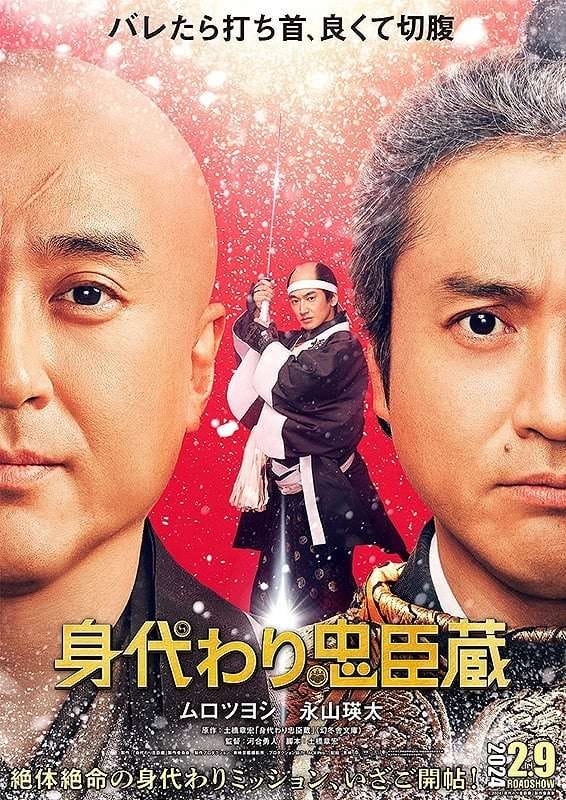
Migawari Mission (Don’t Lose Your Head!)
Migawari Mission (alternative title: Don’t Lose Your Head!) is an excellent opener to the festival. This is a comedic historical caper, loosely adapted from the story of the 47 Ronin. I was hoping to see this having already seen Kenji Mizoguchi’s 47 Ronin, which I am assured is a sumptuous and lyrical cinematic masterpiece. Unfortunately I was not lucky, or perhaps lucky enough, not to have seen that film before seeing Migawari Mission.
The plot to both stories follows the young lord of a feudal samurai clan in Tokugawa-era Japan. He is given the honor of hosting the Shogun, but needs to be instructed in comportment by a senior figure in the Shogunate. This bureaucrat is decidedly corrupt and demands a massive bribe. The young lord refuses to pay and attacks the corrupt official. Unfortunately, he makes the mistake of drawing his sword inside the palace of the Shogun, a capital offense. He is ordered to commit ritual suicide, known as seppuku. This results in the disbanding of his clan. As a result, a group of loyal retainers (ronin are masterless samurai) band together to assassinate the corrupt court official and take vengeance for their master. This is the same historical summary that the audience got at the beginning of the movie, so now you’re up to speed.
Kenji Mizoguchi’s film is commonly considered to be a masterpiece, one of the pinnacles of cinema. This is a silly movie, probably best suited to be watched on a long overnight flight, about the ne’er-do-well brother of the corrupt official, who has to take his brother’s place, while avoiding angry ronin rightfully seeking revenge. This is like seeing Mount Fuji vs. seeing a picture of Mount Fuji. There is no comparison, but if you haven’t actually seen Mount Fuji in person, you might end up believing that the photo is pretty good. In other words, not being able to make the comparison really helps this movie, I suspect.
Sillliness abounds in Migawari Mission, and for an opening film at a festival, it’s a solid pick. It won’t overshadow any of the serious contenders for best film, but it’s not a weak starter either. Excellent performances, great physical comedy, and genuinely heartfelt at points. An auspicious beginning!
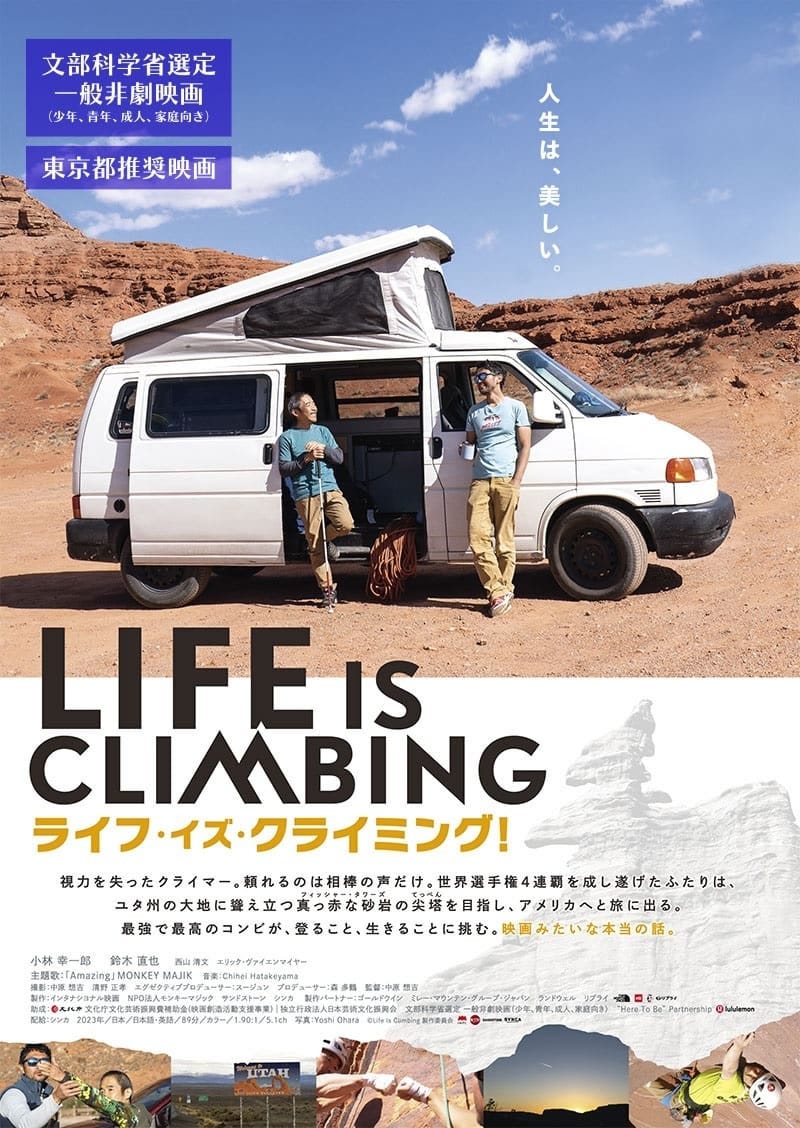
Life is Climbing
Life is Climbing is a documentary about a visually impaired climber named Koichiro Kobayashi, who sets off to climb the Fisher Towers in Utah, with the aid of his sighted guide, Naoya Suzuki. The director of the feature, as well as Koba-san and Naoya Suzuki, were actually present at the screening I attended. While you might believe that, with the climbers physically present in the auditorium with us, how could we believe that Koba-san was ever in danger?
Watching the subject of the documentary climb steep rock faces with only the verbal aid of his sight guide is a harrowing experience. You can hear every sucked-in breath, every gasp, every laboured inhalation. It’s a gruelling endeavour merely to watch this man risk his life for something that frightens him, but is also a source of joy.
Rock climbing is the ultimate adventure. In order to climb, you must embark on a journey. It is the ultimate personal challenge, and as a love letter to climbing, this film is a massive success.

The first misfire of the festival. Revolver Lily is an action-thriller-espionage film, set in the 1930’s(?). There are enormous violent action-filled set pieces where countless villainous soldiers managed to all get shot in the exact same place in the shoulder and fall down unconscious. There is an extremely silly recurring villain that appears bizarrely in a jump-scare fashion, completely abandoning any internal coherent logic to the storytelling. My friend and I found it greatly amusing, but this was clearly not the intention of the storyteller. The film was incoherent, frequently absurd, and made a litany of baffling storytelling choices. There is a brief appearance of a villainous yakuza boss that I found entertaining, if only for the suggestion that the film was about to attempt to become yet another different genre of film, this one being one I might enjoy despite the schlocky execution. That being said, it was amusing in the sort of “what bizarre directorial choice is going to happen next?” Perhaps a more charitable reviewer might find something charming in this.
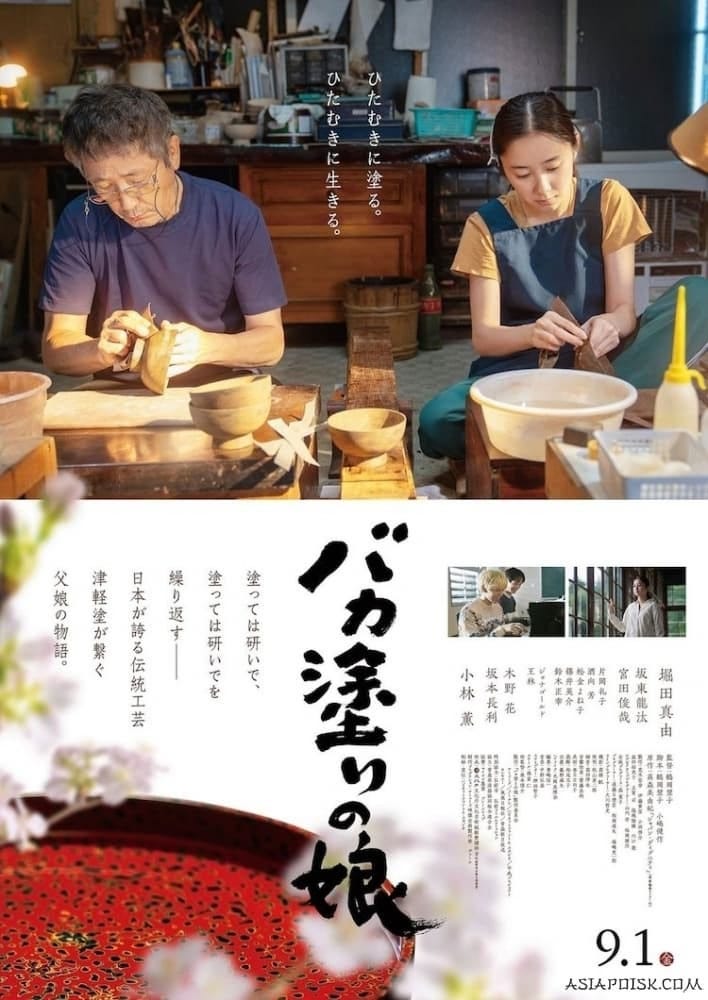
Tsugaru Lacquer Girl could very nearly become a documentary about the process of making tsugaru lacquer items, and very little of the movie would actually need to change. This will charitably be described as mostly watching two dedicated craftspeople painstakingly making beautiful works of art. It is meditative, almost embalming in how the film slowly envelops you into it’s orbit. My heart rate slowed to a trickle of molasses watching this film. A single moment stretches into an eon in this movie, both for better and for worse. It is immensely calming to watch a talented artist make something beautiful, even if that process is not filled with drama or thrills. Where there is conflict or any fuel for drama in this film is through the fraught dynamic between the father and the brother of the protagonist Miyako. Indeed, this is often a very lovely family portrait of transforming social dynamics in Japanese society, as well as a love letter to a traditional Japanese art form. Don’t go into this expecting any higher stakes or melodrama, and this will enchant you like only a truly fine piece of lacquer ware can.
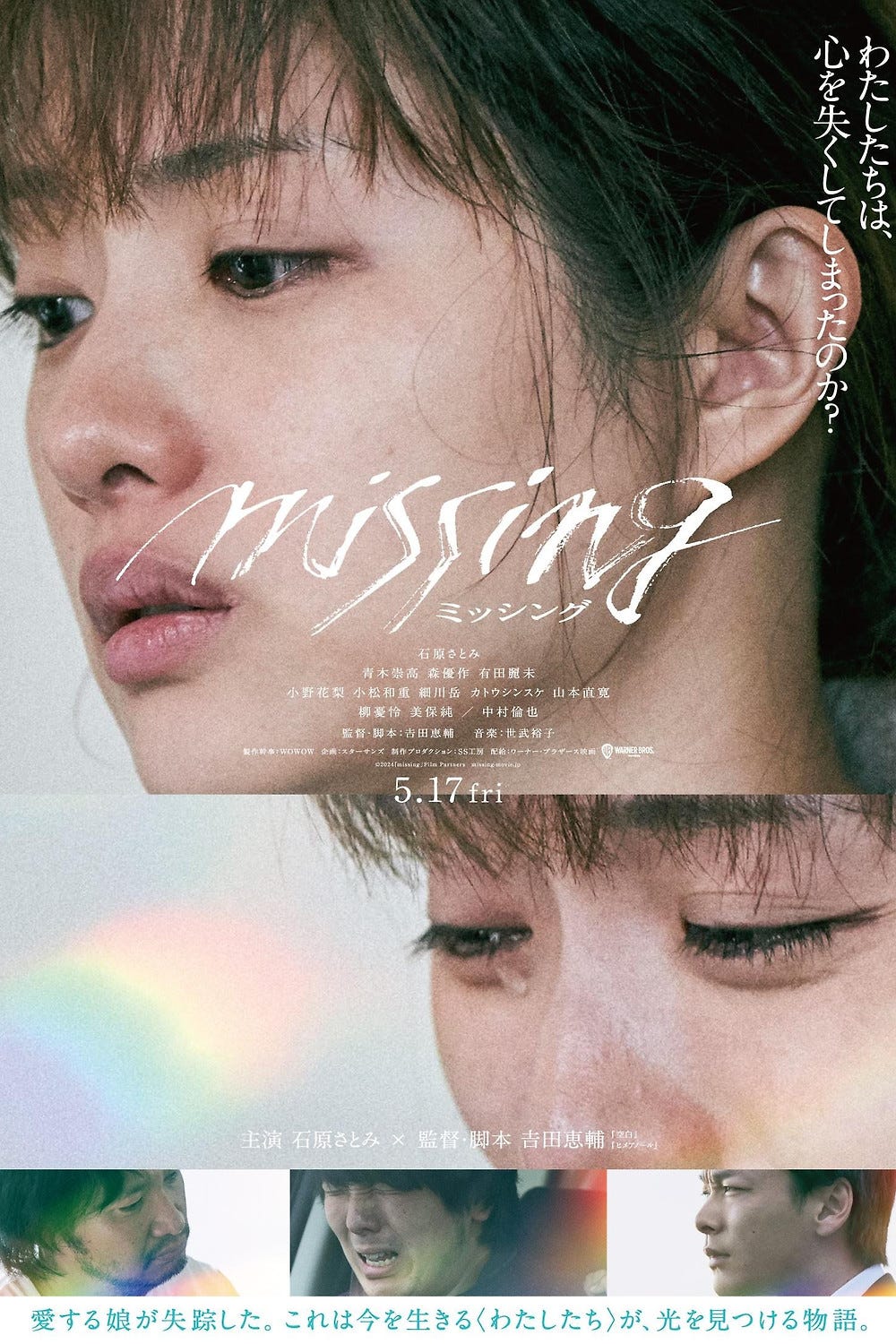
For the penultimate film that I saw at TJFF, I watched a heart-bruising tearjerker called Missing. An extraordinarily tragic story about a family whose only child goes missing, and their desperate efforts to find her. The story gradually explores the way the media exploits their tragedy for the personal gain of the news station and the reporters in question. Featuring a gut-wrenching performance by lead actress Satomi Ishihara, this is a very well-made but painful to watch drama.
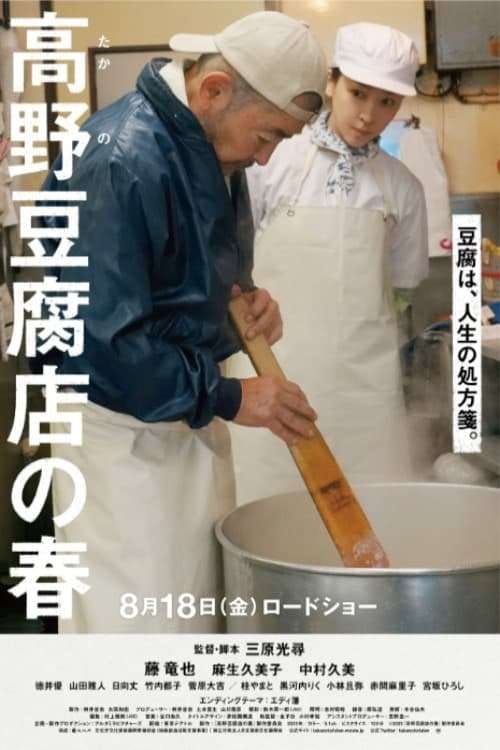
The final film of the fest, and quite possibly my favourite to boot! Takano Tofu is a delightful comedy featuring a generational handover of a traditional tofu shop from father to daughter. Tatsuya Fuji appears as the stern, traditional father who makes the best tofu in Onomichi. His daughter, played by Kumiko Aso, performs as his faithful assistant in creating traditional Japanese tofu. The movie begins to feel like an Ozu film where certain key elements have been inverted. Like some of his work, there is a daughter that certain figures in her life, in this case her father and his barber shop buddies, conspire to engage in a romantic entanglement. Admittedly, any devout Ozu admirer would probably note any similarities are very minor, but I remember making the connection in the theatre. This is a delightful and tender comedy, with great leading and supporting performances. Takano’s barber shop buddies are some of the most charming and gregarious secondary characters I have enjoyed spending time with in quite some time. All in all, this was a tender and gentle comedy – a marvellous ending movie to the festival. To top it off, we also were treated to a top notch taiko drumming performance!
I wish I had gotten to see more, but unfortunately life got in the way! Can’t wait for next year!
 Commonplace Curiosities