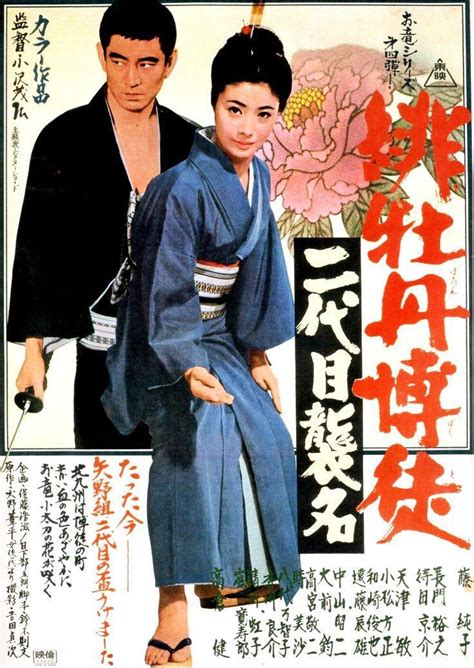
A young woman, the daughter of a yakuza boss who is tragically murdered, sets out as a wandering “gambler” or bakuto seeking revenge. Junko Fuji stars as the young wanderer, Oryu the Red Peony, who is soon joined by a colourful cast of characters played by legends of Japanese cinema such as: Ken Takakura as Katagiri, a virtuous yakuza, and none other than Tomisaburo Wakayama, a comedic yakuza don with a burning flame for our leading lady.
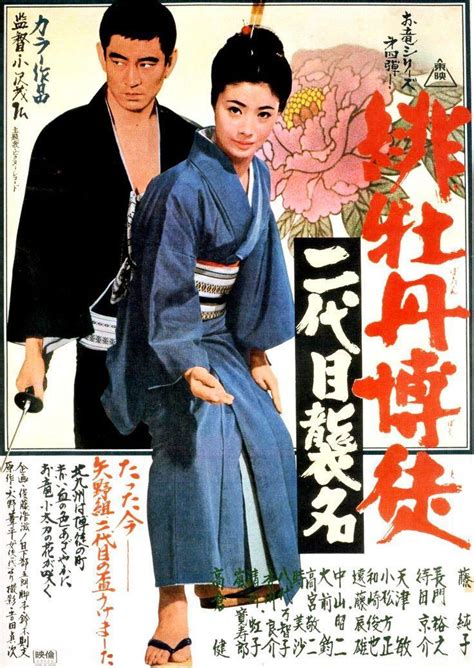
Junko Fuji, later to be known as Sumiko Fuji, possesses old-school leading lady charisma in spades. With extraordinary expressivity and passion, it is a pleasure to watch her every moment on screen.
Junko Fuji was the daughter of Koji Shundo, a Toei film studio executive rumored to be a yakuza himself. She starred in over 50 films, many of them ninkyo eiga, or chivalrous yakuza films, before making Red Peony Gambler, directed by Kosaku Yamashita, which is widely considered one of the high water marks of the genre.
Ken Takakura, also known for his efforts in the ninkyo genre, was described by Mark Schilling, one of our most esteemed genre specialists in Japanese cinema, as a “Japanese John Wayne.” For my money, Ken Takakura definitely has a similar tough guy persona, but the character’s he plays never venture into the casual cruelty that John Wayne often portrayed. The Duke could be a bit of a bully, whereas Takakura has this soft side. In particular, he tends to play very selfless and noble characters. His characters experience suffering, and they tend to almost know it, but nonetheless have the moral fortitude to hold steady and stay the course. This is all to say, his performance is tremendous. Tender and stoic, he and Junko Fuji light up the screen whenever they appear together.
One of my first thoughts on watching the entrancing opening segment, where we the audience are introduced to Oryu and her story, is how did they make such an extravagantly beautiful film? My assumption (and this comes with the backgound knowledge that yakuza films of this period were what you might call B-movies, the second feature on the weekly double bill) is that this yakuza flick wouldn’t get the big budget treatment. Not so. Junko Fuji, Ken Takakura, and Tomisaburo Wakayama were all big stars at the time, and Toei, known for making yakuza movies, were one of the biggest studios in Japan at the time. (For the record, they still are). That being said, the stunning matte painting backgrounds, the set and costume design, the visual splendor of the opening scene alone: this is an extraordinarily gorgeous movie. Great care was taken at every point in making this movie and it clearly shows. Kosaku Yamashita is one of my favourite directors in the genre. So far, he has never failed to deliver.
I’ll finish gushing about the movie with a brief mention of two great characters: Fugushin (the blowfish), the dedicated and loyal underling to Oryu’s leading lady, and Fujimatsu the Immortal. Never ever end up in a feud with a character nicknamed “The Immortal.” The ending scenes of carnage are magnificent and a great way to end a captivating debut in a compelling film series. If you’ll forgive my cheesiness, it puts the “bang” in banger.
 Commonplace Curiosities