I’ve always been fascinated with societies shaped by distance and isolation. Groups that live in remote communities experience change at a much slower rate than communities that are attached to the outside world. The remoteness protects and preserves fascinating and unique cultural idiosyncrasies which don’t last when exposed to the tidal waves of cultural exchange, new innovations, and the relentless march of history.
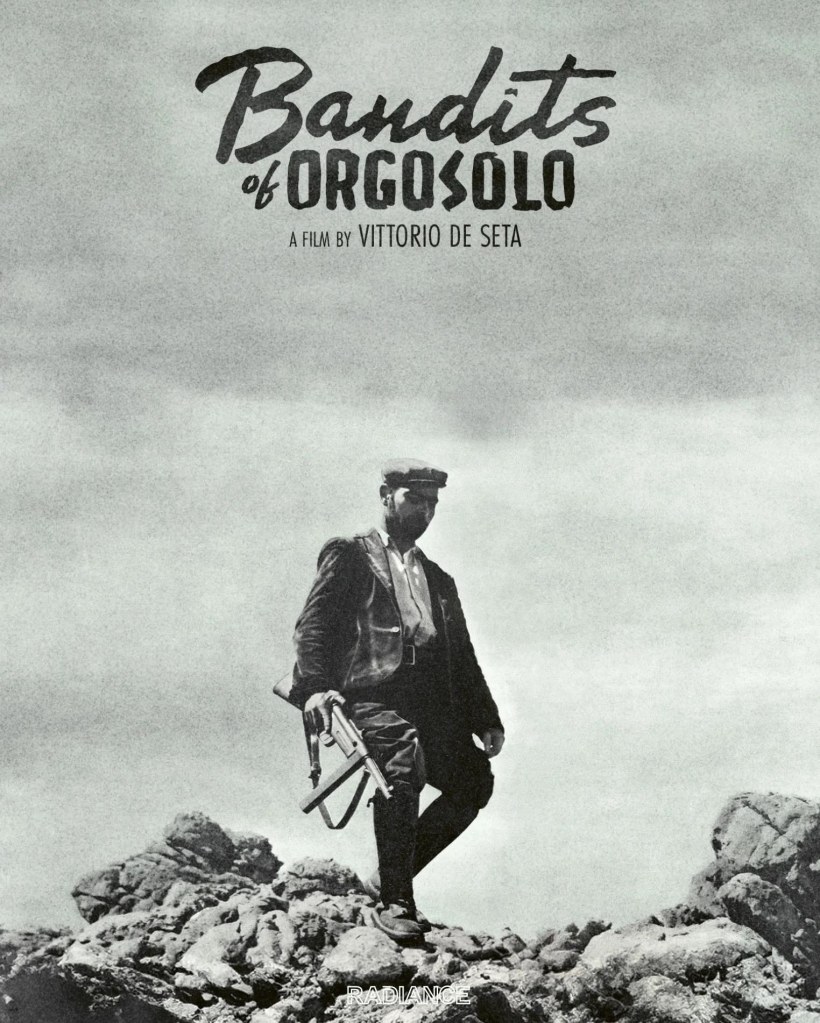
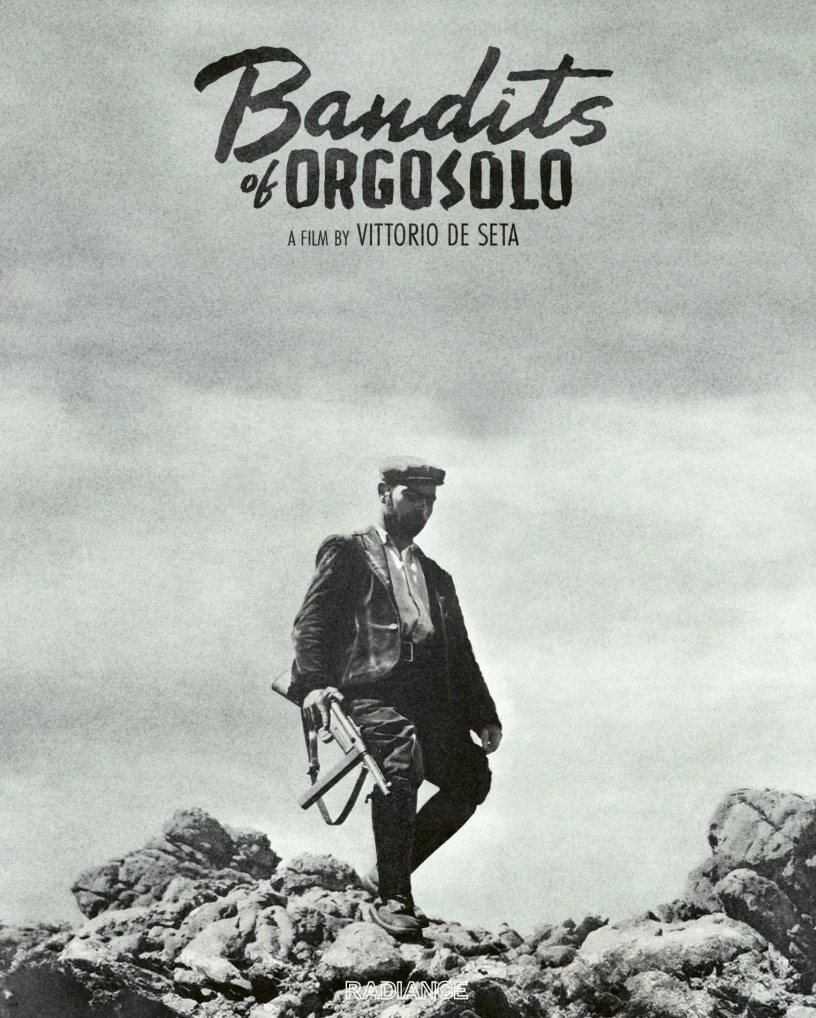
Orgosolo, a remote pastoral community in Sardinia, infamous for the notorious banditry that took place around the town, is one such locale. Vittorio De Seta, director extraordinaire of Bandits of Orgosolo (1961), tells the story of the community and of the shepherds who sometimes find themselves outside the law. De Seta could be easily confused with Vittorio De Sica, who directed the classic Italian Neorealist masterpiece Bicycle Thieves. In many ways, these are remarkably similar movies. Bicycle Thieves explores the social and economic conditions necessary in which a man might be forced to engage in theft. The film unpacks the tragedy of a man who finds himself in such circumstances, including the deeply emotional impact these events and circumstances have on his young son. Vittorio De Seta ultimately makes a very similar film, about how the material conditions and cultural mores influence the path of a shepherd from the remote town of Orgosolo, deep in the Sardinian mountains.
De Seta was already very familiar with the community, having made a series of critically lauded documentaries about this community, most notably Orgosolo’s Shepherds (1958). Having already built connections with the locals, Vittorio was able to cast local residents in his first feature. He does a tremendous job, casting capable and expressive performers. Similar to Bicycle Thieves, Bandits of Orgosolo features an adult/boy pair (in this case two brothers), and to compound these similarities, the adult lead’s voice is dubbed by a professional actor.
Bandits of Orgosolo tells the story of two shepherds who discover a trio of bandits in their sheepfold. Despite the fact that he provides no assistance and isn’t involved himself, his refusal to aid or cooperate with the Carabinieri leads to severe consequences. A shootout between the bandits and the police lead to the death of an officer of the law and Michele (our protagonist) is accused of being a bandit. As a consequence of his lack of faith in the justice system, an inability to afford a lawyer, and concern about his flock of sheep, he decides to go on the lam. He hasn’t finished paying for his flock, you see, and he can’t afford to lose them. Michele and his younger brother are pursued by the Carabinieri deep into the stunning Sardinian wilderness, allowing for some truly astounding landscape cinematography. The compound interest of tragedy and misfortune that dog his footsteps through the mountains culminate in a bleak ending, that might even top the bitter conclusion to Bicycle Thieves.
Bandits of Orgosolo, like Bicycle Thieves, is an exemplar of the Neorealist movement in Italian cinema. Great lengths are taken to craft authenticity and accuracy, but at the same time, there is enough staging and lighting, a certain level of technical artifice behind the scenes that pure realism is avoided. Vittorio De Seta and his uncredited co-cinematographer Luciano Tovoli stayed in the village of Orgosolo with a local family, including the family of notorious bandit Graziano Mesina. Indeed, lead actor Michele Cossu’s life story allegedly mirrored his fictional one, in some respects. (I would love to know more about that, but the filmmakers are vague about these details in the special features, sadly.) The life of banditry, and how that life is only one step away from a shepherd, is immensely fascinating to me. The locals live a traditional pastoral lifestyle, which is often only a single minor misfortune from destitution.
This extraordinary tale of tragedy in the Sardinian countryside is monumental in it’s accomplishments. This might be cinephile social-suicide but I might like this more than Bicycle Thieves? Hard to say. What I will say, though, is that this is a vital and important piece of art, one that I am immensely grateful for the opportunity to have seen. The Radiance release is really good! I can only hope that more people get the chance to watch this!
 Commonplace Curiosities