Life of Hishakaku (1963), sometimes known as Theatre of Life is a Japanese yakuza film directed by Tadashi Sawashima. This is a classic melodrama and one of Japan’s Toei studios early yakuza movie hits. The story is about a yakuza (played by the legendary Koji Tsuruta) who falls in love with a young prostitute named Otoyo. Otoyo, sadly, cannot be with our protagonist because she is a working girl for the gangsters that employ our hero. These love struck characters naturally flee these tragic circumstances and end up being taken in by the boss of a rival yakuza family, the Kogane Family. As a result of being given hospitality in such difficult circumstances, he shikaku feels as though he owes a debt of loyalty to his newfound boss. Acting on this loyalty in the dark underworld of the yakuza means that Hishakaku will have to pay a terrible price in terms of a steep prison sentence at a long separation from the love of his life Otoyo.
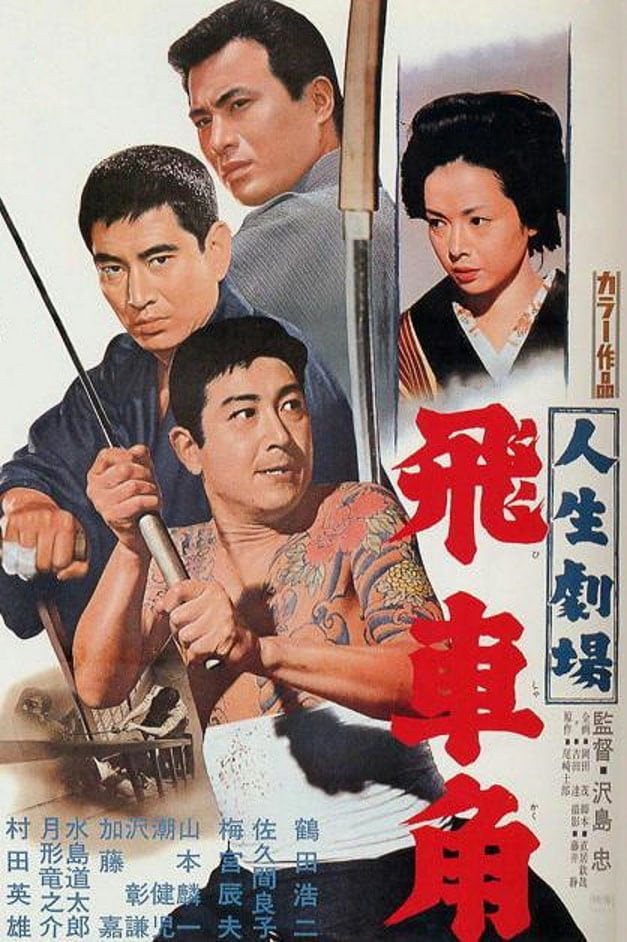
I first learned of Theatre of Life from a list that was published on complex magazine that detailed the 25 greatest yakuza films. While you may think that a film that is alleged to be in the top 25 of any category would be easy to find, that is not the case. This was a difficult film to track down but I certainly managed. While unfortunately the image quality of the video that I managed to get a hold of left something to be desired, some of the original visual splendor of the cinematography set and lighting design remained. I never fail to find it extraordinary that comparatively minor films, compared to the gargantuan mega budget blockbusters of today, manage to look so sumptuous. In addition to the beautiful frames, this film is notable for starring two mega stars of the Japanese cinema Koji Tsuruta and Ken Takakura. Both of these are early performances before their star making terms. In particular Ken Takakura known for his stoic tough guy demeanor, plays a much different character type then in the roles that he is most known for. He is much more of a bumbling type in this film and doesn’t engage in nearly as much heroic badassery as he does in future films.
This is a classic of the ninkyo eiga style of yakuza film. However, it is notable that it doesn’t romanticize the yakuza in the same way that other films in the same genre do. Apparently the director of the film had certain brushes with the ukusa which led him two avoid romanticizing them, unlike the film trends of the era. In addition it’s notable that the film is much more about the price that is paid by virtue of membership within the underworld. Of course that price is paid not only by the protagonist, but also by otoyo who suffers greatly throughout the story.
To a modern viewer, there are elements of the story that will disappoint or detract from the greater narrative. For example the subplot between Miyagawa (played by Ken Takakura) and Otoyo (play by Yoshiko Sakuma) doesn’t quite make sense when presented like the other part of a love triangle when Miyagawa assaults her (while Hishakaku is in prison) which becomes the basis of their relationship. Personally, i found this to be a major weakness of the film when the love between Hishakaku and Otoyo is much more developed and furthermore not based on what I would at least read as rape.
The performances in this film are extraordinary. The direction is sublime. There is a particularly memorable shot of Koji Tsuruta waiting into the ocean , as waves crash against the rocks in the sea the sunset glimmering across the ocean as the culmination of his confrontation with Miyagawa. It’s a remarkable image that was seared into my brain. Sometimes it doesn’t make sense to me why I love these films so much and then I see a cinematic frame like that added all clicks. It all comes together in a beautiful way. I don’t know why this particular sub genre of the Japanese cinema has so many beautiful gems to discover but I’m grateful that I found them and then I’ve been able to take the time to explore them. This is going to be difficult to find but if you are interested in classic Japanese crime cinema from the 1960s then I would argue that this is worth a look. The only challenge to that is that this period of film making happens to have an embarrassment of riches so I might be hard-pressed in narrowing down the ones that you should really be prioritizing. Theatre of Life (1963) is a deeply tragic yet tender portrait of a man and woman locked into Tragic destinies that they are unable to disentangle themselves from. This is not a genre for the faint of heart but if you find a way to muster your courage you’ll find a story of a man and woman who loved and suffered deeply for that love.
 Commonplace Curiosities