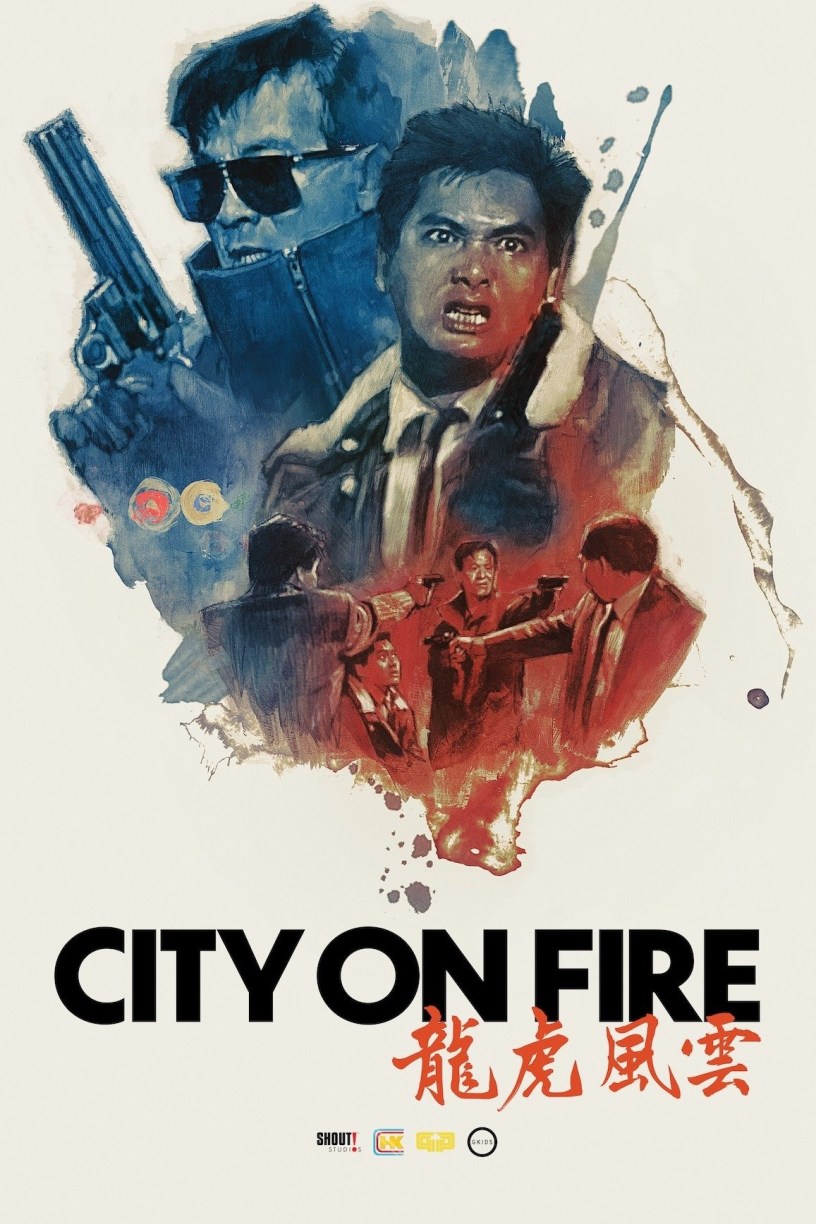
A man trapped between two masters.
This is probably an unremarkable observation: I am far from the only person to have said this but I think in this case it bears repeating. The cops act almost as if they are a separate gang from the jewel thieves. They even dress similarly to the thieves. The methods in which they use to fight crime suggest that public safety is just another racket for a different variant of predator.
This is a remarkably cynical film – cops vs. criminals as a factional dispute rather than law & order vs. criminality. The police are an institution which is incapable of keeping promises made: Lau can’t keep the promise of letting Chow out of dangerous undercover work, Chow can’t keep any promises made to his long-suffering girlfriend, and the actual police aren’t able to keep the implicit promise of making Hong Kong safer. The melodious saxophone score that permeates the film sounds like a lament to these many broken promises.
As a heroic bloodshed movie, the story is deeply concerned with the bonds of brotherhood. Loyalty and fidelity are powerful forces: Chow Yun-fat and Danny Lee bond over their broken relationships with the women in their lives who have left them. Both men have experienced what it is like to juggle too many loyalties. Eventually, one of these obligations will triumph over the others. It’s notable that the “cause” that these men devote their lives to is a jealous one – again their professions are two sides of the same coin, rather than truly oppositional forces.
Something that I love about film in general is the way in which movies act as unintentional time capsules. I have never been to Hong Kong and this film was created several years before I was born. This is a snapshot of Hong Kong as it was – as it can never be again. There is something about the restless nature of the characters – Chow Yun-fat being constantly on the move, that relentless sense of forward motion. Hong Kong is not a kind city – this is a harsh urban jungle. Chow Yun-fat must sprint down countless streets, evade police in warren-like parking structures, sucking on a cigarette like a talisman against bad luck. The claustrophobia of getting into one of those small angular boxy cars, shoulder to shoulder, ashy smoke clinging to towering skyscrapers. I can relate to these in many ways, perhaps like you I have many recollections of a Friday night jammed into a friends car, zipping off somewhere in the city, the endless night enveloping us, blinking neon and city light in the background. City on Fire is a remarkable window to the past, somewhere my feet will never carry me.
It’s worth noting that this film is an “inspiration for Reservoir Dogs”, which in all honestly probably means that Reservoir Dogs is a lesser City on Fire. Sometimes, art that is inspired by something has the opportunity to refine the vision of the original. That refinement is not needed. City on Fire is an extraordinary piece of art, a roaring bonfire rather than a mere spark of inspiration.
 Commonplace Curiosities