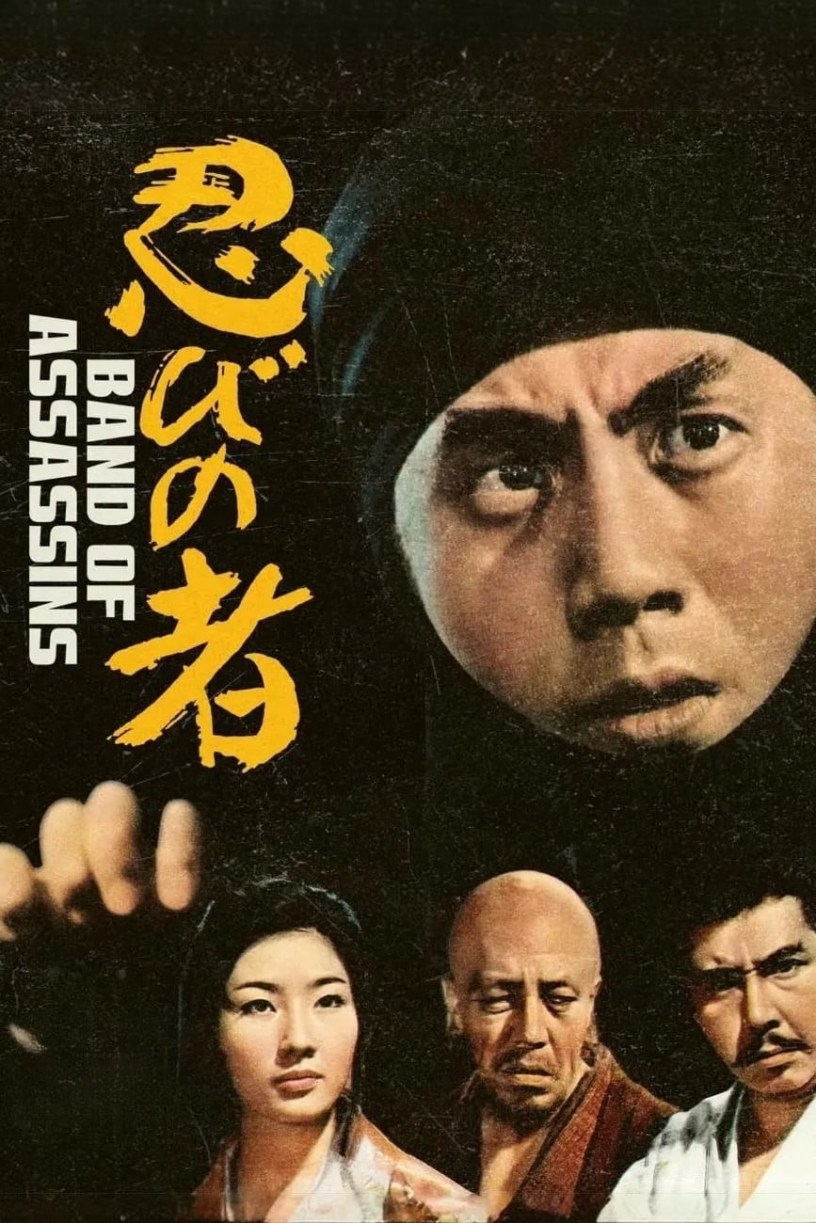
Ninja’s have long been an object of fascination for me, ever since I read a book called Blue Fingers, a novel about a boy trained in the ways of the ninja and must use his ninja wiles to play a trick on a local daimyo in order to avert an oncoming war. I distinctly remember the way the novel romanticized the ninja, following a lot of martial arts tropes. Each child learning ninjutsu developed mastery of a particular specialist weapon. The realities of being the equivalent of a special forces operative behind enemy lines was not addressed. Nor was the shinobi code addressed: a code whose purpose it is to have it’s own adherents not follow any code of conduct. The only acceptable outcome is victory: any method is acceptable as long as victory is achieved.
This story is a fascinating inverse from the traditional tropes of the jidaigeki. The samurai class were adherents of Bushido, which governed their conduct extensively. However, while the ninja may have their own code, Sandayu, the leader of Momochi Fort, explicitly instructs his followers to abandon that code when it suits their purposes. Whether that is stealing, assassination, even the levels of deception and coercion to which the leaders of the village subject the lower-ranked ninja. Sandayu goes to extraordinary lengths to compel Goemon to assassinate Oda Nobunaga, (the assassination sequence is a favourite of mine.) Warfare as deception indeed. When that is the basis of warfare, you really have to ask yourself where the deceptions end…
Where some jidaigeki explore the ways in which the code of Bushido ring hollow, Band of Assassins is an exploration of how our various codes, moral, spiritual, political, etc are used as means of control and subjugation. A tool for our masters to suppress and direct us, at their behest. Goemon can never be free while bound by the strictures of being a ninja, and all the restrictions that follow, so his only recourse is to find a way in which to leave these strictures (perhaps not so successfully) behind.
Possibly one of my all time favourite period pieces of Japanese cinema, the Radiance release is exceptional. The black and white cinematography is superb, and comes to live in crisp detail. The visual splendor of the blocking is magnificent, and this has some incredibly delightful shinobi combat that sets itself apart from classic chanbara. In fact, many classic ninja tropes originate from these films. If you are a collector like me, the Radiance box set is well worth the investment.
 Commonplace Curiosities